
The handoff is moving upstream
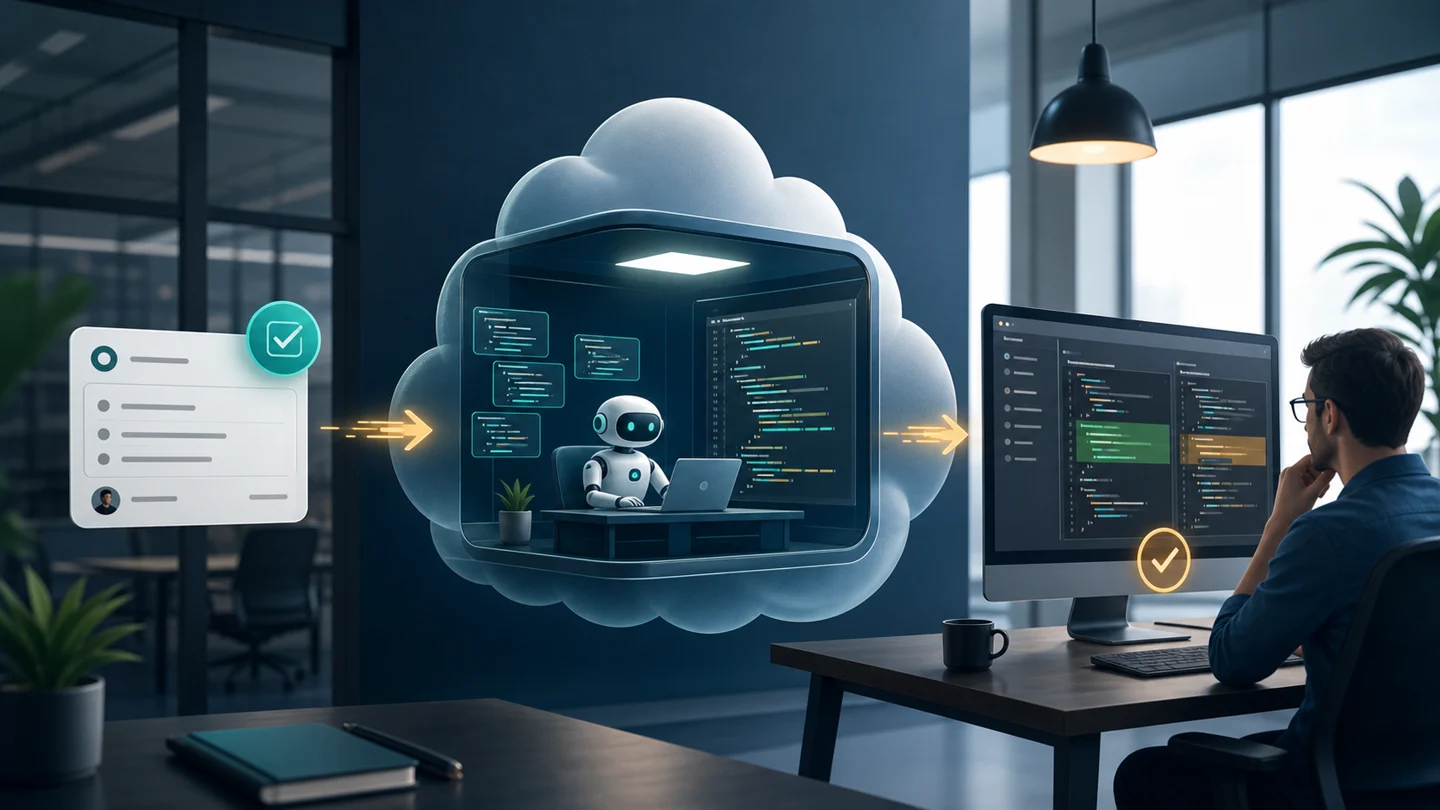
For years, the issue tracker sat just outside the real development loop. Product teams wrote a ticket, engineers translated that ticket into code, and the pull request became the first place where implementation detail was visible. GitHub's newly general-available Copilot cloud agent integration for Linear compresses that sequence. A Linear issue can now be assigned to a coding agent that studies the brief, works in a temporary development environment, opens a draft pull request, reports progress, and requests human review.
That makes the issue itself more consequential. It is no longer only a record of work to be done. It can become the operating brief for a software agent. Acceptance criteria, affected areas, constraints, test expectations, and branch choices all gain practical weight because they shape the first implementation pass.
What changes for development teams
The integration includes controls that let teams choose a model, select a repository-specific custom agent, set base and working branches, and steer an active task through comments. Those details matter because autonomous work is useful only when it follows the team's delivery conventions. A background agent that writes code but ignores branch policy, local checks, or review ownership simply moves effort from implementation into cleanup.
The better workflow starts before assignment. Teams need issue templates that distinguish desired behavior from possible implementation, name the files or product surfaces that are in scope, describe what must remain unchanged, and provide a testable definition of done. Repository guidance should then carry the durable engineering rules that do not belong in every ticket.
The new bottleneck is review quality
Faster code generation does not remove the need for judgment. It increases the volume of work that can arrive for review. The most valuable human contribution shifts toward deciding whether the proposed change solves the right problem, whether the test evidence is credible, and whether the implementation creates maintenance or security debt that is not obvious in the diff.
Draft pull requests are a sensible boundary. They make the agent's work inspectable without pretending it is production-ready. Teams can preserve ownership through required checks, review rules, protected branches, and small tasks that can be validated independently. The agent handles a bounded construction pass; people still approve the consequence.
What to watch next
Issue systems are likely to become richer orchestration surfaces. Expect more controls for environment selection, budget limits, test policies, and escalation when a task is ambiguous. The winning interfaces will not be those that hide the agent completely. They will show enough state for a developer to understand what was attempted, what evidence was produced, and where human input is required.
The practical lesson is immediate: teams should improve the quality of their issues before measuring how many of them an agent can complete. Clear work descriptions, explicit boundaries, and disciplined review are becoming part of the runtime, not just project-management hygiene.